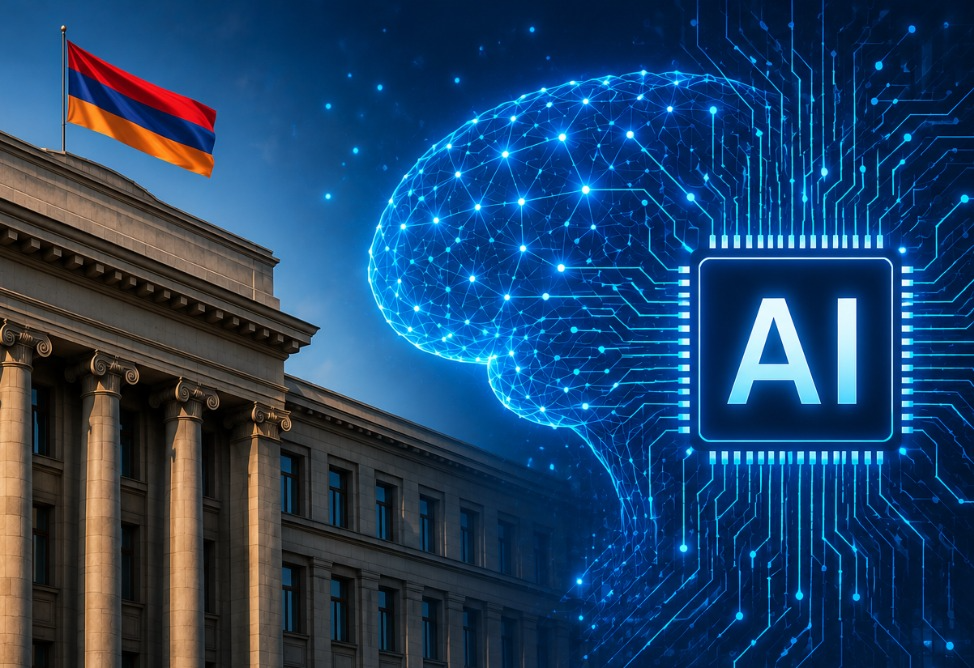
Artificial intelligence is becoming not only a technological tool but also an important factor in economic growth, capable of changing the structure of the labor market and the long-term pace of economic development. This is stated in the analytical note of the Central Bank of Armenia, "The Role of Prudent Economic Policy in the Era of AI Proliferation."
According to IMF estimates, about 40% of jobs in emerging market economies, including Armenia, could be significantly affected by the adoption of AI. The ultimate effect will depend on the level of digital infrastructure, workforce training, and the quality of regulation.
The study identifies three possible development scenarios. The first assumes limited AI adoption without systemic state policy: in this case, GDP could temporarily grow by approximately 6.5% over the first decade, but then the effect would weaken, and productivity growth would slow down.
The second scenario is based on targeted investments in AI, education, workforce retraining, cybersecurity, and innovation. With investments at 0.7–0.8% of GDP per year, the economic effect could reach 7.2%, and the long-term contribution to growth would be about 0.15 percentage points annually. At the same time, the share of highly skilled workers could increase from 25% to 32%.
The third, most profound scenario involves a large-scale transformation of the labor market with the creation of specialized mechanisms for retraining and adapting workers. In this case, GDP growth in the first decade could reach 8.7%, and the long-term contribution of AI to the economy — about 0.3 percentage points.